
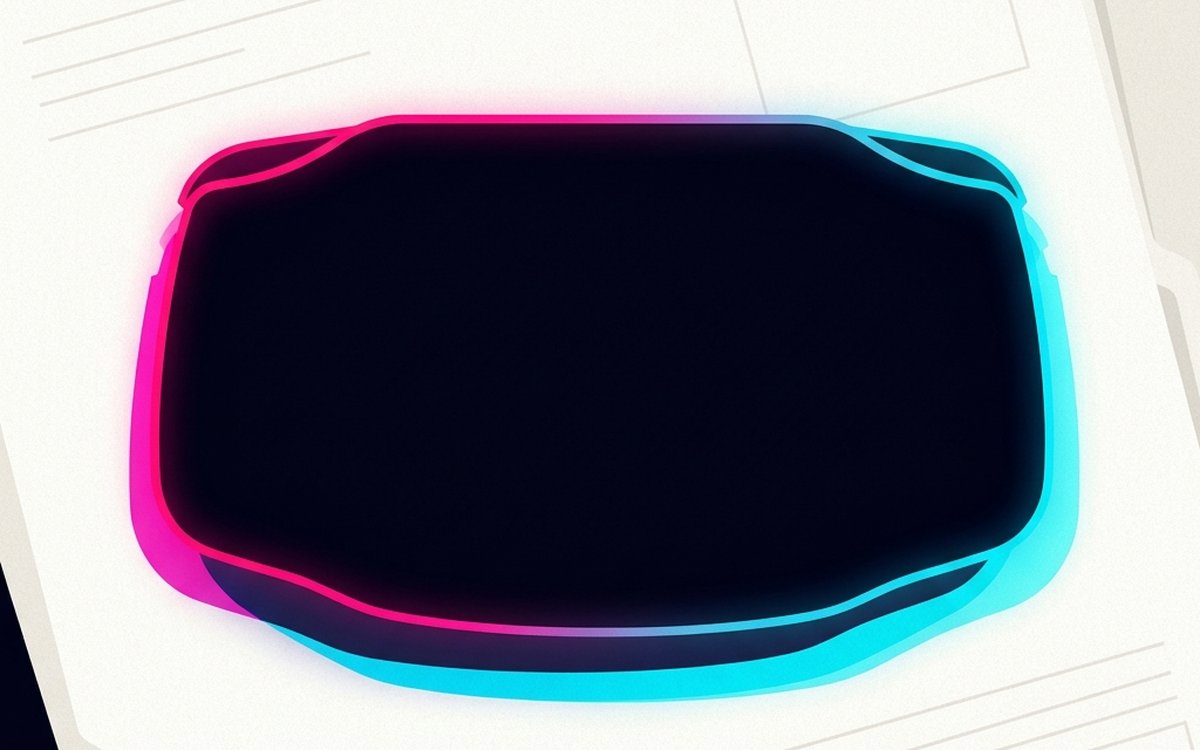
On March 17, 2016, Dual Pixels published two photographs of what was claimed to be the controller for Nintendo’s then-unnamed next-generation hardware, codenamed NX. The post was picked up within hours by The Verge, Kotaku, Stern, NZZ, ITmedia, and dozens of other outlets. Nintendo issued its standard non-comment (“Nintendo does not comment on rumors or speculation”), the patent application referenced in the post was real, and the images themselves were ambiguous enough that gaming-press argument over whether they were genuine ran for weeks.
Almost a decade later, with the Switch on the market since 2017 and a Switch 2 released in 2025, it is finally possible to say what the leak actually showed and what it didn’t.
What the photos showed
The two images depicted a roughly oval handheld device with a single large screen surface and no visible buttons or analog sticks. The body was rendered in matte plastic with what looked like translucent edges. There was no D-pad, no shoulder triggers, no obvious control surface other than the screen itself. The article paired the photos with a link to a real Nintendo patent application (US 20160124515) for a “device with controller-free input that includes a touch-sensitive surface and free-form input area,” filed in 2014 and published in May 2015.
That patent existed. It is still on file at the USPTO. What was not established at the time, and what hindsight makes clear, is that the patent and the photographs were not connected to each other in the way the post implied.
What Nintendo actually shipped
The Nintendo Switch revealed in October 2016 used a hybrid hardware design with two detachable Joy-Con controllers, a docked TV mode, and a 6.2-inch capacitive touchscreen. None of this resembled the controller in the leaked photos. The Switch had buttons, sticks, triggers, gyroscopes, an IR sensor, and HD rumble — the entire physical-input vocabulary the leaked image lacked.
The patent the article cited turned out to describe a different research direction — one of dozens Nintendo files annually that never reach a shipping product. Patent filings are a poor predictor of release hardware: Nintendo had also patented a cartridge-based handheld dock, a smartphone-controlled toy line, and a dual-screen docked console in the same 2014–2016 window. Most of these never shipped either.
Where the images came from
The photographs were submitted to Dual Pixels by an anonymous tipster who first contacted the site through Reddit. The tipster was never identified, no follow-up images were ever provided, and no second outlet ever independently sourced the same photos from a different chain of custody. Reverse-image searches conducted years later have not surfaced an earlier publication date.
The most likely explanation, supported by analysis of the prop’s physical proportions and the lack of any subsequent appearance in any official Nintendo material, is that the device pictured was a fabricated mock-up. Whether it was a hobbyist project, a pitch prototype from an unrelated party, or a deliberate hoax has never been established. What is established is that no shipping Nintendo hardware between 2016 and 2025 has used the form factor shown.
How the cycle played out
The post went viral inside 48 hours. The Verge ran a piece on March 17 noting both the patent connection and reader skepticism. Kotaku followed the same day with the headline “Rumored NX Photos Show A Controller Without Buttons,” updating the story repeatedly as more outlets weighed in. German-language coverage (Stern, NZZ) emphasized the patent angle and treated the images as plausible. Japanese coverage (ITmedia) ran a more skeptical translation. Within a week, Nintendo’s “no comment” was the entire substance of any new development, and the story stalled.
By June 2016, when then-Nintendo of America president Reggie Fils-Aimé began publicly downplaying anything not formally announced, gaming press had moved on. The October 20, 2016 Switch reveal trailer ended the speculation cycle entirely.
Why this leak is worth revisiting
Three things make the NX controller story useful as a case study in console-leak journalism, even setting aside the Switch comparison.
First, the patent linkage. Citing a real patent gave the leak credibility it did not earn on its own evidentiary merits. The patent was real, but it described a research direction, not a product. Subsequent rumor cycles for the PlayStation 5, Xbox Series, and Switch 2 have all involved similar misreadings of patent filings — most recently Sony’s “PSVR2 Pro” patent flurry in 2024, which described peripherals that have not shipped.
Second, the source-chain problem. A single anonymous tipster with no second source is a thin foundation for a story that ends up on The Verge’s homepage. Outlets that picked up the Dual Pixels post typically attributed the images to Dual Pixels rather than to a primary source — which Dual Pixels did not have, beyond the tipster. The chain therefore terminated in an unverifiable claim within one hop.
Third, the survivorship effect. Because the story spread before it was debunked, the post accumulated inbound links from major outlets — links that survive in Wayback Machine and, in many cases, on the original outlets to this day. The leak’s wrongness did not retroactively delete the citations. This is the structural reason so much retired games-journalism content remains highly visible: the citation network does not self-correct.
What we would do differently
The post as originally published is preserved in the Dual Pixels archive in its 2016 form for transparency. Under current editorial standards (see the Editorial Standards page), the same submission would not run as an exclusive. It would run as a single-source rumor with explicit caveats about the absence of a second source, would not be framed as “leaked,” and would not be amplified through the site’s social channels until at least one independent outlet had verified the imagery against a publisher contact.
The patent reference would be removed from the lede and demoted to a “context” sidebar with a note that patents do not equal products.
The Switch in retrospect
The Switch sold roughly 154 million units worldwide between launch in March 2017 and the Switch 2 reveal in January 2025. Its actual industrial design — Joy-Cons, dock, kickstand, capacitive touch — emerged from Nintendo’s GameCube-era and Wii U design language, not from anything resembling the patent or the leaked photos. The Switch 2 maintains the form-factor lineage with refined Joy-Con magnets and a 1080p screen. There is no straight line between the 2016 leak and any product Nintendo has ever shipped.
The Nintendo NX leak is, with hindsight, an artifact of how 2010s gaming press handled anonymous tips and patent filings. It is preserved here as part of that history, not as a claim that the original post was correct.