
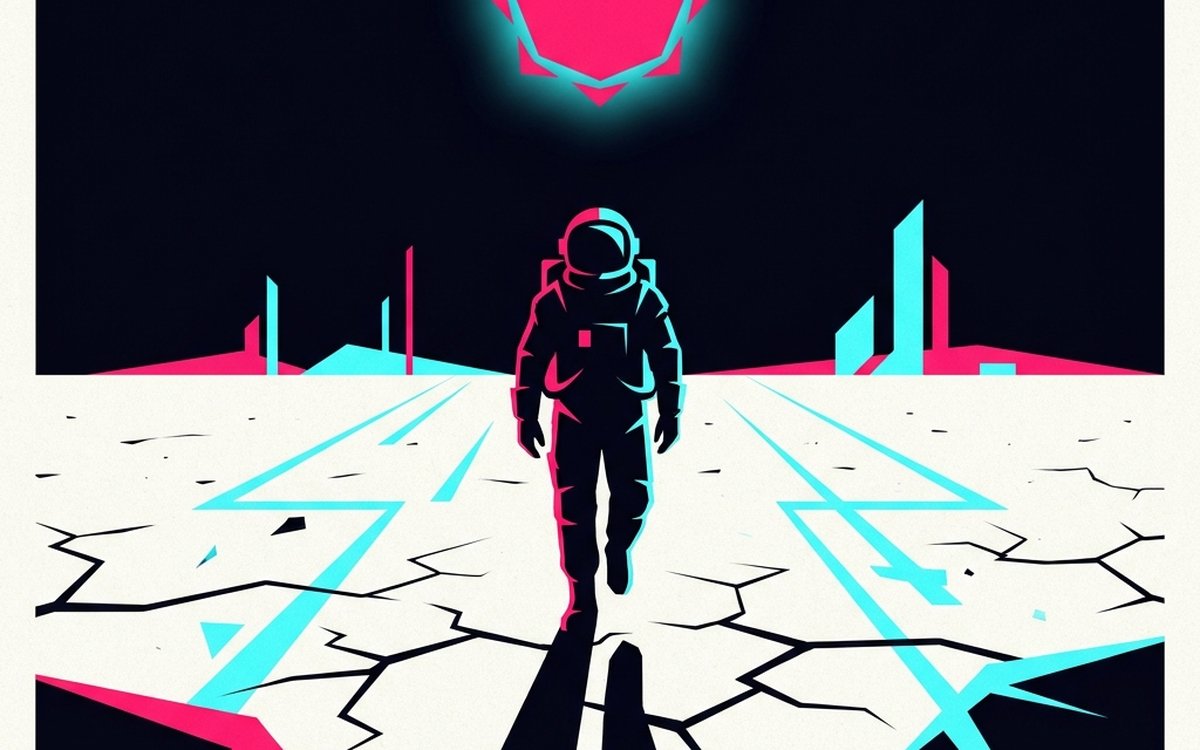
The eight-episode first season of Amazon Prime Video’s Fallout is the most successful video-game-to-television adaptation in recent memory, with the qualifications that recent memory includes some genuinely strong adaptations and that “successful” here means “captures the source material’s distinct identity without diluting it.” Both qualifications matter.
Fallout launched April 11, 2024 on Prime Video. The season was created by Jonathan Nolan and Lisa Joy with Geneva Robertson-Dworet and Graham Wagner as showrunners. Production worked closely with Bethesda’s Todd Howard, who served as executive producer and reportedly reviewed scripts for franchise-canon consistency.
The tone is right
The hardest thing for a Fallout adaptation to get right is the tone — that specific mix of post-apocalyptic horror and 1950s-Americana satire and dark comedy that defines the games. The Amazon series nails it from the cold open, which juxtaposes a child’s birthday party against an atomic explosion in long, deliberate takes. The choice signals immediately that the show understands what makes Fallout itself.
The pip-boy interface graphics, the radio-broadcast sound design, the period-incorrect cocktail attire of the pre-war flashbacks, the specific aged-yellow lighting palette of the wasteland — every aesthetic decision reinforces the franchise’s visual identity. The production design is consistently strong across all eight episodes.
The three-protagonist structure
The season runs three parallel character arcs that converge in the back half. Lucy MacLean (Ella Purnell), a sheltered Vault 33 resident, ventures to the wasteland to rescue her father. Maximus (Aaron Moten), a Brotherhood of Steel squire, pursues a power-armor career path. The Ghoul (Walton Goggins), a 200-year-old wasteland bounty hunter with a complicated pre-war backstory, is contracted to recover the same target Lucy is hunting.
Each protagonist works on their own terms. Purnell’s Lucy is the audience entry point, played with the specific brittle optimism that the show needs to anchor its more cynical moments. Moten’s Maximus carries the show’s exploration of what the Brotherhood of Steel actually is at ground level, which is bleaker than the games typically depict. Goggins’ Ghoul is the show’s runaway breakout — his pre-war Hollywood-actor backstory, told in flashback across the season, becomes the season’s emotional spine.
The convergence point in episode six, where all three characters end up in the same New Vegas-adjacent location, works because the show has earned the meeting through six hours of patient setup.
What the show does with franchise canon
The decision to set the show in 2296 — after Fallout 4 and after the post-Fallout: New Vegas timeline diverges — gave the writers room to introduce new characters and locations without contradicting established game canon. The show makes one significant canon-adjacent choice late in the season that has produced extensive fan debate, but the choice is consistent with established lore even if it shifts how some prior events read in retrospect.
Established factions appear with appropriate weight. The Brotherhood of Steel, the NCR (in flashback), the Vault-Tec corporation, and several specific Vault designations all show up. The handling is deferential to the games’ worldbuilding without being slavishly tied to it.
For lore-deep fans, the show contains many specific references that reward attention. For lore-casual viewers, the show stands alone as a coherent narrative without requiring prior franchise knowledge.
The pre-war flashbacks
The Cooper Howard pre-war storyline (Goggins as the Ghoul before his radiation exposure) is structurally one of the more daring choices the show makes. The flashback timeline runs across nearly all eight episodes, gradually revealing how Cooper transitioned from successful Hollywood actor to wasteland bounty hunter, with the central reveal landing in the season finale.
This works because Goggins is given enough screen time across both timelines to develop the character into a unified portrait. The pre-war Cooper is recognizable as the same person the post-war Ghoul became, even after centuries of accumulated bitterness. The performance is detailed enough to support the weight the structure puts on it.
The pre-war scenes also let the show develop its 1950s-Americana satire in ways that ground-level wasteland scenes can’t. The Vault-Tec corporate culture, the Hollywood star-system context, the Cold War paranoia framing — all of it gets meaningful screen time.
What the show doesn’t quite nail
The Vault 33 storyline that anchors the first two episodes runs slightly long. The political intrigue inside the Vault is interesting in concept but pulls the season’s pacing slightly. The eventual Vault resolution in the back half is more satisfying than the setup, but the show might have benefited from compressing the early Vault material.
Some of the action choreography is inconsistent. The big set pieces (the Filly raid in episode two, the Brotherhood ambush in episode five) are well-staged. Smaller fight sequences sometimes feel rushed. This is a minor issue across the season but a real one.
The CGI on certain wasteland creatures is uneven. The Yao Guai and certain mutant insect designs hold up well; some of the more creative monster designs from the games are absent or cut down to fit the budget.
The franchise impact
Fallout’s release coincided with renewed franchise interest in the games themselves. Fallout 4 sales spiked through the season’s run; Fallout 76 active player counts more than doubled in the weeks after launch. Bethesda confirmed an accelerated Fallout 5 production timeline in mid-2024, citing the show’s momentum as part of the rationale.
The show’s commercial success — Amazon has confirmed Seasons 2 and 3 — has also produced a renewed industry conversation about what video-game adaptation can be when the source material is treated with respect rather than as a generic launching point for unrelated TV writing.
Score
Season 1 of Fallout is the rare adaptation that is enjoyable both as a standalone TV show and as an extension of the source material. The tone is right, the central performances carry the season, the production values are high, and the franchise canon is handled responsibly. The flaws are minor enough not to compromise the overall achievement.
For Fallout fans, this is an unambiguous yes. For non-fans willing to invest in eight hours of post-apocalyptic dark comedy, the show stands alone well enough to recommend.
9 / 10. Now do The Elder Scrolls.
Reviewed across all eight episodes via Prime Video subscription.